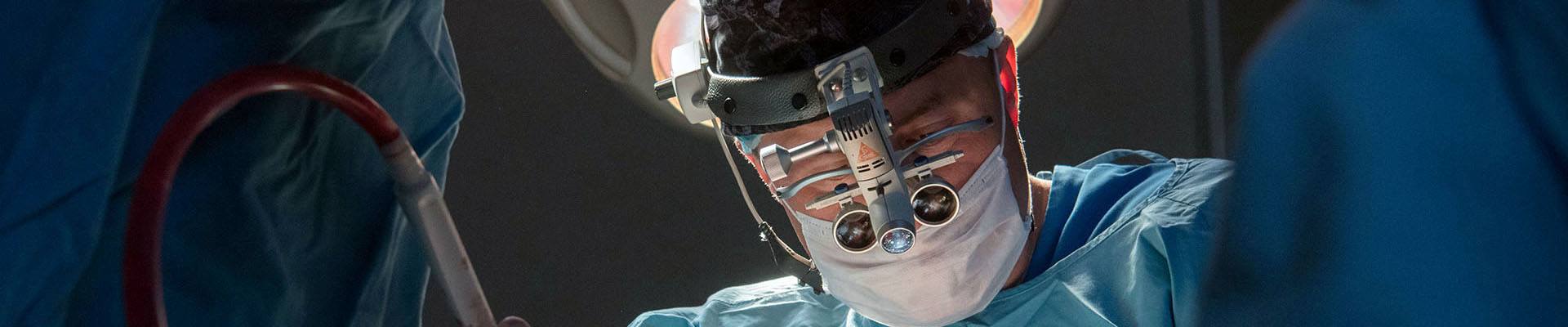
Gold standard surgeries
It is possible to remove benign prostatic hyperplasia with prostates of all volumes, for any age patients, with the lowest risk of postoperative complications. Probability of relapse is less than 2%
Laser enucleation of the prostate has a few contraindications. It is effective in all cases, including gigantic volumes of prostate (more than 200 cc).
Erectile function is preserved within a month after laser surgery
However, the birth of children is unlikely. Because of retrograde ejaculation occurs in the most cases. Sexual intercourse ends with ejaculation into the bladder, not outward. Sperm goes along with urine later due to urination. Retrograde ejaculation does not interfere with sensations inherent in sexual intercourse, therefore psychological adaptation occurs quickly.
Recently holmium, thulium and green lasers are used in urology
Holmium and thulium laser enucleations of the prostate (HoLEP и ThuLEP) have similar function result. Side effects are rare, patients return to normal life after two or three days after surgery.
However, the thulium laser has some advantage. Due to a denser energy beam, tissue incision is softer, which helps hemostasis — stopping bleeding and subsequent improved tissue healing.
During operation with a green laser, the benign prostatic hyperplasia is removed with a high temperature, that process is called tissue vaporization. The method is inferior to ThuLEP and HoLEP, since it leaves the burn of surrounding tissues, many patients note painful and frequent urination after surgery with a green laser. In our clinic, prostate vaporization is rarely used.
The laser removes the benign prostatic hyperplasia without harming the surrounding tissues, the prostate is kept whole and uninjured
At the same time, the laser beam is defocused onto bleeding vessels to ensure hemostasis, which helps speeding healing. The removed tissue is displaced into the bladder, crushed, as in a meat grinder, with a special endoscopic instrument - morcellator. Then tissue is removed and examined in the laboratory for other conditions.
Removal of benign prostatic hyperplasia requires no incisions. The laser endoscope, which diameter not thicker than a ballpoint pen, is deployed into the bladder through urethra. Patients are given a spinal anesthetic. Depending on the volume of the prostate, the operation takes one to two hours.
Patients have a two-way catheter placed for continuous bladder irrigation overnight. The first channel removes urine, through the second - a physiological saline is started to wash the bladder. Thus, we prevent the formation of blood clots in the bladder. The catheter is removed 1-2 days after surgery, the day after that the patient returns home.
Removed adenomatous tissue is examined in the laboratory for the prostate cancer
Morphological study takes up to two weeks. According to statistics, prostate cancer is found in 3-5% of operated patients.
In addition, we measure the urine flow rate and examine the condition of the bladder using ultrasound - nothing should interfere with the natural urinary flow.
Benefits of laser enucleation of the prostate:
- Effective with prostates of all volumes.
- Low rate of complications. There is no excessive bleeding, which is important for all patients, especially with bleeding disorders.
- Fast urination recovery. Catheterization time (urinary drainage installation) is less than with transurethral resection (3-5 days) or open prostatectomy (7-9 days).
- Preservation of erectile function. Some studies have shown that erectile function is slightly improved after laser enucleation.
Cost of laser enucleation of the prostate
We carry out laser enucleation of the prostate for Russian citizens free due to high-tech assistance channel. Our doctors will help you fill out the necessary documents for obtaining a federal quota. The cost of laser enucleation of the prostate through paid medical services, including inpatient stay, is around 150 - 160 thousands rubles.
Department of Urology at Sechenov University is the only clinic in our country, which has holmium and thulium lasers
In our clinic, laser enucleation is performed by Dmitry Enikeev, the deputy director of the Institute for Urology and Reproductive Health at Sechenov University. He studied the method of the holmium laser enucleation of the prostate in Germany. His laser enucleation technique gained international recognition due to presenting at congresses of the European and American Urology Associations.
It is the main method for patients older than 75 years, or with severe comorbidities
High intensity focused ultrasound (HIFU) is suitable for men who are at risk for radical prostatectomy. It may also be suitable for men with cancer recurrence – second tumor following other treatments. Method is not recommended for patients who has history for rectal surgery. In this case, there is a possibility of rupture of the intestinal wall and the appearance of fistulas.
HIFU is more effective in the case of small prostate size. If the prostate size is large than 30 cc, transurethral resection of the prostate (TURP) or laser enucleation of prostate (НоLEP/ТhuLEP) is performed before HIFU.
HIFU destroys tumor cells by thermal exposure through focused sound waves
As a magnifying glass acoustic lenses are used to achieve the necessary intensity at the target tissue.
Department of Urology at Sechenov University was the first clinic, which performed HIFU for treatment of prostate cancer. For ultrasound ablation we use Ablatherm® Robotic HIFU (France) (the latest generation) which is the best in its class.
Minimal invasiveness is the advantage of ultrasound ablation
Non-malignant tissue in and around the organ unaffected by the ablation. There are no complications of surgical intervention such as intraoperative bleeding and postoperative urinary incontinence, moreover there are short hospital stay and short recovery time.
Ultrasound therapy – procedure steps
A diagnostic and ultrasound probes are introduced in the rectum without incision. The doctor observes the operating field through the display, the joystick on the control console adjusts the position of the probes and the power of the ultrasonic pulses. The software helps the surgeon to accurately influence cancer cells without damaging the surrounding structures.
Patients undergoing HIFU treatment are given a spinal anesthetic. Duration depends on the volume of the tumor, usually it takes two to three hours. At the end of procedure a urethral catheter is installed, it would be removed a week later. Hospitalization is two to three days.
Cost of HIFU-ablation of prostate cancer
We carry out HIFU-therapy for Russian citizens free due to high-tech assistance channel. Usually, there are no problem with obtaining quotas for HIFU. Our doctors will help you fill out the necessary documents. The cost of operation through paid medical services is around 100 thousands rubles. It is less than in other foreign or domestic urological departments.
In our clinic more than a thousand patients, including from near and far abroad, are underwent successful treatment of prostate cancer.
According to published studies, fusion-biopsy is the most effective method for determining prostate cancer
Biopsy is a mandatory surgical intervention for suspected prostate cancer. A tissue sample is taken from the “suspicious” focus, which is subjected to a morphological study under a microscope. Thus, the presence of cancer cells is checked and, if it is detected, the stage of the disease is determined in order to choose a treatment strategy.
Fusion surpasses traditional needle biopsy
The traditional transrectal biopsy is called the «blind»; it is performed through the rectum. Because of the tissue is taken randomly, choosing the areas of the prostate in which cancer most often develops.
The advantages of fusion technology were clearly shown by a study of US National Institutes of Health. Fusion diagnostics was performed in 195 men who had an ordinary biopsy excluded prostate cancer. A tumor was found in 94 people, 12 of them had the third or fourth stage of the disease.
Computer helps to detected tumor foci
A fusion-biopsy differs from the traditional one in that a special computer program compares of the previously obtained magnetic resonance imaging (MRI) with the image transrectal ultrasound (TRUS). The doctor sees in real time a picture of the operative field, supplemented by the possible foci of the disease which the ultrasound scan cannot show.
In addition to the high-definition 3D image with suspicious areas highlighted, electronics show directions for introducing biopsy needles to pick up the morphological material from the right places. Biopsy needles are inserted in the perineal area under spiral anesthesia.
Fusion-biopsy is preferred for minimally invasive operations
The fusion-biopsy clearly identifies the lesion of prostate cancer that makes it possible to perform the minimal invasive surgery and target precisely on the tumor without affecting non-malignant prostate tissue. Brachytherapy (exposure of radioactive seeds) and cryoablation (freezing the tumor to the state of the ice-ball) are the most common minimally invasive ablative techniques. After a fusion-biopsy, there is not need to freeze or irradiate the entire organ, we can affect exclusively on the tumor focus to within millimeters.
Cost of fusion- biopsy
Cost of fusion-biopsy through paid medical services is around 50 thousands rubles. It is less than in other foreign or domestic urological departments.
Cryoablation may offer excellent oncological results combined with minimal morbidity
Cryotherapy is recommended for patients with serious concomitant diseases (heart, neurological) in case of intermediate- and low–risk prostate cancer. Also, it is recommended in the case of recurrence after removal of the tumor in another way.
The risk of urinary incontinence is six fold less after cryoablation then prostatectomy.
Efficacy of cryoablation of low–risk prostate cancer is 90%, intermediate-risk – 75%, high-risk – 60%.
Contraindications:
• large prostate size (>50 cc);
• difficult urination (peak urinary flow rate - Q max <10 ml/s);
• tumor spreaded to the pelvic lymph nodes;
• history for rectal surgery;
• colorectal cancer.
Cryotherapy of the prostate may led to erectile dysfunction that is why this surgical intervention is not recommended for men, who interested in maintaining erectile function.
During cryoablation tumor exposed extreme cold, which led to formation ice-ball and ablation of tumor cells
Firstly tissue undergoes by extreme low temperature (up to -40-60 °C) performed with argon, and then thawing with helium. As a result of temperature changes the rupture of the membranes of tumor cells occurs. Cryoablation is performed using hollow needles (cryoprobes) (like knitting needle) through which gas is circulated. Ice-ball forms without damage surrounding organs with ultrasound-guided.
During the hour and a half operation, freezing is performed twice. At the end of procedure a urethral catheter is inserted, it would be removed on day 5. The next day after the recovery of urination, the patient is discharged home without any restrictions in physical activity.
Cost of cryoablation in Moscow – free due to federal quota
Usually, there are no problem with obtaining quotas. Our doctors will help you fill out the necessary documents. The cost of cryoablation of prostate cancer through paid medical services, including for non-Russian citizens, will be around 400 thousands rubles.
Cryoablation is possible in only two medical Russian departments
In our clinic cryotherapy is performed by Dmitry Enikeev, MD. He completed an internship at the Barzilai clinic (Israel) under the guidance of one of the founders of the method, Professor Shmuel Citron.
The only way to treat the complication is injections with mitomycin. In Russia, it is performed only at the Department of Urology at Sechenov University
Scar occurs in the zone of connection of the urethra and bladder. The complication develops after removal of benign prostatic hyperplasia or prostate cancer in 9% of patients. It may make it difficult to urinate until it becomes impossible to urinate.
Mitomycin injections help in 85% of cases, repeated administration of the drug increases the effectiveness up to 93%
Alternative methods - endoscopic electro- and laser-resection - rarely eliminate relapse. As a rule, scar tissue grows back. The operation must be repeated every 3-4 months. It is possible to divert urine through a tube (cystostomy) in the anterior abdominal wall. But in this case, the patient has to walk all his life with a urinal - a container for collecting urine.
Mitomycin inhibits the development of scar tissue, it was confirmed by research in our clinic
The effect is due to the ability of mitomycin to suppress the lymphocytes and collagen involved in the formation of the scar. The drug has long been used by oncologists, plastic surgeons and otolaryngologists. A number of studies by foreign authors reported the effect of mitomycin for the treatment of postoperative scar. The Department of Urology at Sechenov University conducted its own research under the guidance of Professor L.M. Rapoport, which confirmed the findings of colleagues.
Mitomycin injection completes endoscopic narrowing surgery
The scar is excised with laser energy or cut off with an electric loop. The deleted tissue is removed through the urethra. All procedures are performed under spinal anesthesia for 15 - 20 minutes. Hospital stay is for 2 - 3 days.
Cost of treatment of postoperation scar with mitomycin
We carry out this treatment for Russian citizens with insurance policies free. At present, we do not carry out the manual through the paid medical services.
Effective treatment of the urethral stricture restores normal urination without risk of complications
Cheek mucosa is better than other possible materials suitable for replacing the narrowing of the urethra. "Patch" is well accustomed; the wound in the place of the material intake heals quickly and without a trace. Buccal mucosa urethroplasty is possible at any age patients.
Cheek mucosa is the best material for urethral expansion
In comparison with other grafts (the skin of the penis, scrotum, the wall of blood vessels or tissue from the ear region) the mucous membrane of the cheek is stronger, has the desired moisture and antibacterial properties.
Employment of special dilators (bougie) or endoscopic dissection with a cold knife does not provide the necessary quality of life for the patient. As a rule, after a month and a half, a stricture recurs. The area of the narrowing of the urethra coarsens, and in some cases increases.
The founder of the method, Professor Guido Barbali, taught our doctors the buccal mucosa urethroplasty.
Experienced doctors with surgical practice perform urethroplasty in the Department of Urology at Sechenov University for at least 10 years. The art is to pick up a section of the mucous suitable in size and quality, match it correctly, and sew jewelry into the urethra tissue for engraftment. High-quality microsurgical instrument and magnifying optics Carl Zeiss is used during the operation.
Two teams of surgeons work during operations on the plastic of the urinary canal
The first team takes a section of the mucous membrane of the cheek; the second one performs urethroplasty. It helps to reduce the time of the interaction of the graft with the external environment and to avoid the risk of purulent complications.
As a rule, buccal utretroplasty takes around two hours. The patient is under endotracheal anesthesia (breathing is supported with the artificial lung ventilation).
The buccal mucosa at the site of the material intake is sutured with a self-absorbable suture, which is invisible outwardly. In the urethra for the flow of urine, bypassing the healing zone, urethral catheter is installed. Drainage is removed after 28 days, when the graft has settled down.
At the end of the operation, the second insurance drainage is established in the healing zone. Through it flows wound discharge: mucus and blood residues. Insurance drainage is removed after two days., The second drainage is not used in cases of a bloodless operation.
Cost of treatment of the urethral stricture with buccal mucosa urethroplasty
We carry out the operation for Russian citizens free due to high-tech assistance channel. The cost of buccal mucosa urethroplasty through paid medical services, including non-Russian citizens, is around 120 - 195 thousands rubles.
Efficacy of minimal invasive therapy of the prostate cancer is the same one of radical prostatectomy
In our clinic, we use low-dose rate brachytherapy (permanent prostate brachytherapy). Radiation seeds, about the size of grains of rice, are placed inside prostate. Neutron radiation destroys the DNA of cancer cells, destroys their ability to divide and grow.
Non-malignant surrounding tissues are received a lower dose of radiation and easily restored. The seats activity decreases over the time and drops to zero at 8-10 months. Inactive sources remain in the body and don`t affect the human condition.
Unlike traditional radiation therapy, brachytherapy destroys prostate cancer without harming the surrounding tissues
Benefits of brachytherapy:
- Don`t harm the tissues surrounding the prostate.
- Hospitalization takes two days instead of seven weeks due to external radiation therapy.
- You can return to your normal activities a few days after treatment.
- The blood vessels and nerves that control erection are not damaged, so there is a low possibility of erectile dysfunction.
- In case of recurrence, second tumor, further treatment is possible. As a rule it will be the method of hormonal therapy or cryoablation.
Brachytherapy is recommended for patients interested in preserving sexual function
It is performed for any age men with localized intermediate- and low–risk prostate cancer (PSA level ≤ 20 ng/ml, Gleason score ≤ 7).
There are several criteria for the selection of patients:
- Prostate size up to 60 cc. If the prostate size is larger, hormonal therapy can be performed to reduce the organ size for 3 months.
- The tumor has not spread outside the prostate (Т1-Т2 stage).
- Until urination difficulty did not reach unacceptable level (peak urinary flow rate not less, then Q max <10 ml/s)
If transurethral resection of the prostate (TURP) was performed before brachytherapy, it is necessary to wait for the wound to heal. Healing usually occurs after six months.
Brachytherapy – procedure steps
Implantation takes around two to three hours. Radioactive I125 capsules are brought into the perineal zone between the scrotum and anus with special needles and US-guided. Usually 50-60 radioactive capsules are required. The software calculates its optimal number and location.
At the beginning of the operation, a urethral catheter is inserted into the bladder through the urethra, and urine is drained through it during and after the operation. The catheter also provides an acoustic shadow, so the doctor sees the urethra well, where it is not necessary to implant sources.
Cost of brachytherapy
We carry out brachytherapy for Russian citizens free due to high-tech assistance channel. Our doctors will help you fill out the necessary documents.
The cost of brachytherapy of prostate cancer for non-Russian citizens through paid medical services is around 550 thousands rubles. It is less than in other foreign or domestic urological departments.